Purpose & Principles
OUR PURPOSE & GUIDING PRINCIPLES
In Montreal, 1 in 5 experience food insecurity and struggle to put food on the table. The number is even higher across Canada, where 1 in 4 people face food insecurity.
Not everyone is impacted equally. Systemic discrimination is a key driver of inequities: In Quebec, 33% of Indigenous peoples, and 24% of racialized people experience food insecurity.
Our work is guided by core values of social justice and solidarity, openness, equity, dignity and respect, and care. We strive to be anti-oppressive in our governance and program design, and our award-winning Healthy Food Policy is foundational to everything we do.
The following guidelines shape how we meet urgent needs, build community, and drive lasting change.
OUR THEORY OF CHANGE
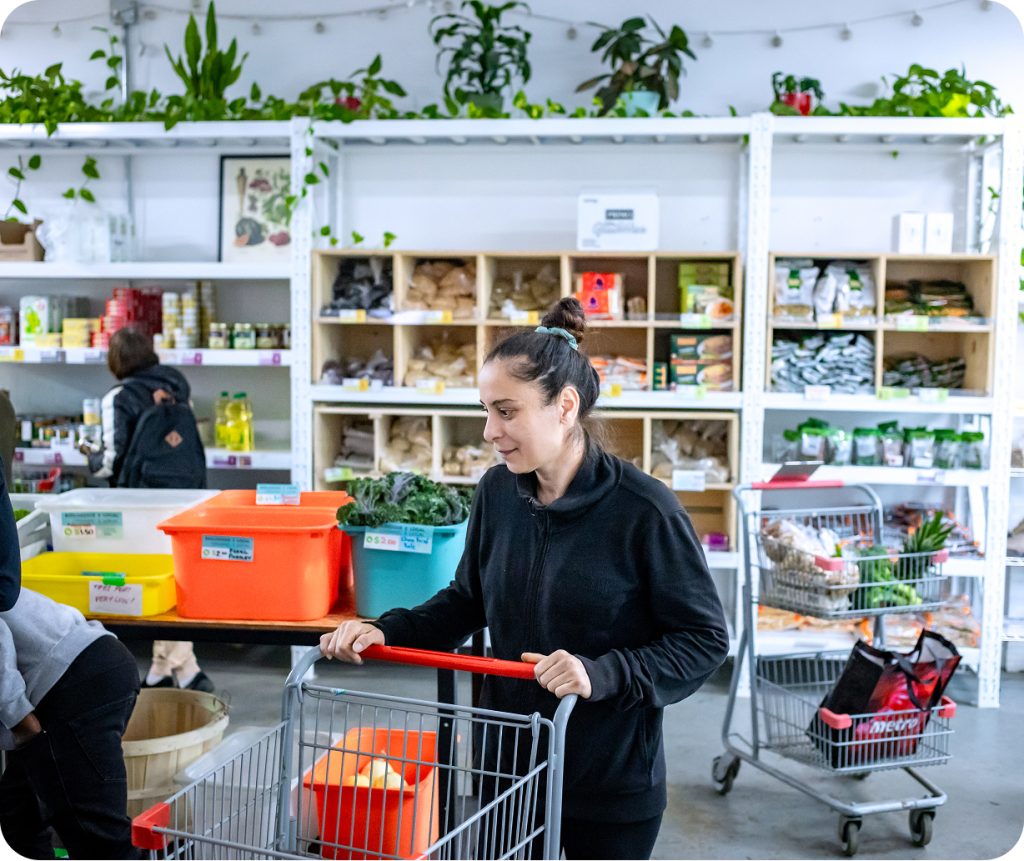
Launched in summer 2024, The Depot’s Theory of Change provides a clear framework to guide our programs, priorities, and decisions. Grounded in our values, it helps us work strategically across our three impact areas to build a more just and food-secure community.
Our Impact Areas
Respond to Immediate Need
Support Community Building & Long-Term Health
Work on Dismantling the Structural Barriers that Create Food Insecurity
OUR HEALTHY FOOD POLICY
Our Healthy Food Policy ensures that all of our programs prioritize fresh, culturally diverse, and nutrient-dense foods. We recognize the vital role of nutrition in promoting health and well-being, and this policy is foundational to how we design and deliver every program.
In 2019, The Depot’s Healthy Food Policy was recognized by Québec’s Health and Social Services Ministry and awarded the Coup de cœur des ministres prize for making an outstanding contribution to the health and social services network.
Read our Healthy Food Policy to learn more about our purchasing priorities, how this policy has been a pivotal tool for transforming our food bank, and discover how you can support this work.
OUR ANTI-OPPRESSION COMMITMENTS
OUR LAND ACKNOWLEDGMENT
We live and work on the unceded territories of the Kanien’kehá:ka (Mohawk) people. Tiohtià:ke (Montreal) is historically known as a gathering place for many First Nations and is now home to a diverse population of Indigenous and other peoples.
As a food security organization, we acknowledge the invaluable role of the Kanien’kehá:ka in tending and protecting the land from which our resources originate. We also acknowledge our privilege of being able to live and work on these lands and waters and recognize that this has come from the exploitation of Indigenous communities.
We understand that a land acknowledgement is not reconciliation but a first step in fulfilling our responsibility in beginning the process of healing with the Indigenous communities. We are aware it will take a long time to foster a bond of trust, but it is work we are committed to. We are committed to learning and to the exchange of knowledge with the NDG community and beyond.
We also understand that this statement is a work in progress and will be reviewed regularly to reflect our ongoing journey in reconciliation. The Depot aims to progress to becoming co-resistor, in which we stand in solidarity with the Indigenous communities in resisting oppression through continuous education. Until then we invite and encourage our community to educate themselves and offer any and all feedback.
OUR COMMUNITY CONTRIBUTION MODEL
Today, food insecurity affects community members of all ages and circumstances, increasingly including those who are working but still unable to make ends meet. Our Community Contribution Model helps ensure no one is excluded, while keeping our programs as universal, accessible, and barrier-free as possible.
Each program offers suggested contribution amounts, and participants are encouraged to choose the option that they can afford. For those unable to contribute financially, our Temporary Support Program allows access to services without payment for six months, with the option to renew as needed.
This model strengthens equity and dignity, brings people together across different financial realities, and helps generate sustainable revenue to support our programs — making it possible for those who can contribute to help ensure access for community members facing financial barriers.