
INEQUITY FEELS ISOLATING
While inequity is systemic, its impacts are often experienced in isolating and invisible ways, with the burden carried more often individually than collectively.
Struggling to access affordable food, keeping up with constant rent increases, and generally making ends meet can feel overwhelming — and often discouraging. When systems are complex and change feels out of reach, it’s no wonder many people are left feeling alone.
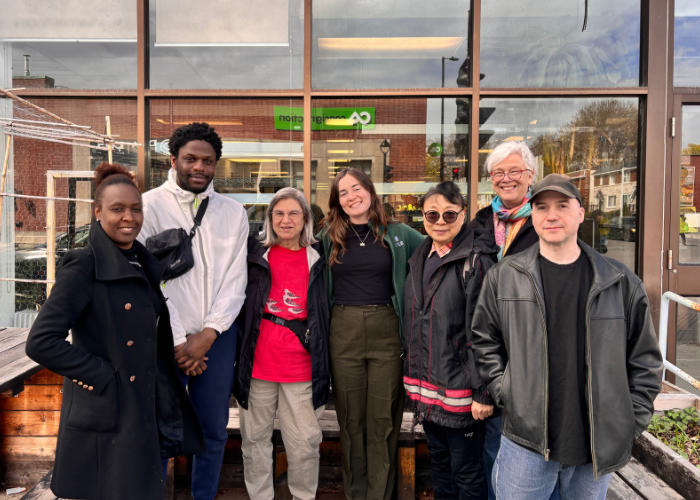
At The Depot’s Social Justice Committee, there is a conscious effort to challenge that isolation and channel our frustration into action through community organizing and collective engagement.
FROM INDIVIDUAL STRUGGLES TO SHARED REALITIES
Each month, community members come together to talk about the realities they’re facing. As people begin to share their experiences, something starts to shift. What once felt like an individual struggle becomes part of a shared reality. For many, hearing others speak about similar experiences can create a sense of connection and shared understanding.
That recognition can be powerful. It can reframe personal experiences, not as isolated difficulties, but as part of broader systemic issues.
“I am at my limit for a lot things but The Social Justice Group has given me the resources to keep going, and even to have a little bit of hope.”
“We are survivors. […] we see firsthand how systemic barriers like inadequate incomes, rising housing costs, renovictions, and gaps in health services contribute to food insecurity.”
Through conversation, shared reflection, and community organizing, lived experience becomes a valuable source of insight, knowledge, and advocacy. What they’ve lived through isn’t just something to endure, but something that can inform change.
Others arrive from a different place: frustration, anger, and a sense that something isn’t right.
“I was interested in joining the Social Justice Committee because I see what’s going on with housing and the cost of food. And instead of just being angry, I wanted to do something positive.”
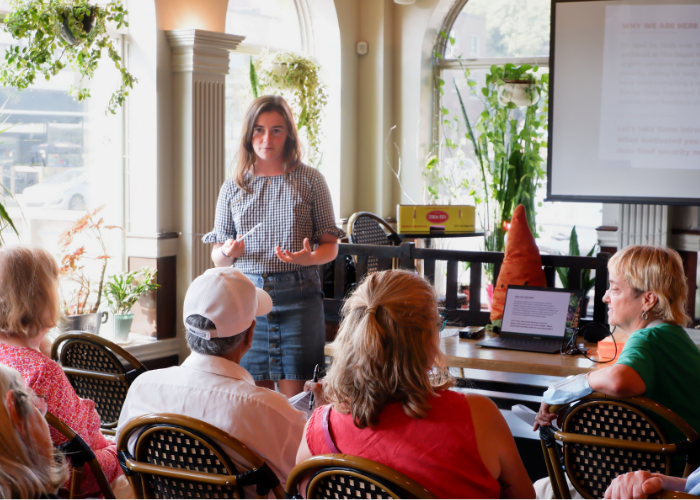
Whether people come looking for connection or arrive ready to act, the committee creates space for experiences to be shared collectively rather than carried individually. Conversations can open new ways of understanding common challenges, while creating opportunities for people to contribute their perspectives, skills, and ideas. People begin to speak up, to contribute, and to recognize the value of their own perspective. They move from holding these experiences individually to bringing them into a collective space, where they can shape conversations, inform ideas, and begin to push for change.
BUILDING HOPE TOGETHER
From there, action becomes possible. Not because the challenges are simple, but because they are no longer faced alone.
And in that shift, something else begins to take shape. A sense of hope — not abstract or distant — but grounded in relationships, shared understanding, and the act of doing something together. A hope that grows as people see their contributions matter, and that change, however gradual, is possible.
“Personally, being part of this group makes me feel useful. I’m currently unemployed, and this allows me to contribute my skills, feel engaged, and give back to the community. I also really value the social aspect of the group.”
At the Social Justice Committee, hope is not something people wait for. It’s something we build together.